About Omron APFC Relay Electrical Relays
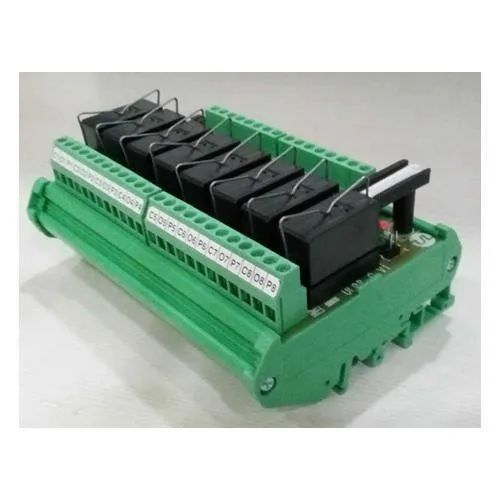
Relay R2NContacts: 2 CO; rated load AC1 - 12 A/250 V AC; coils AC or DC; for plug-in sockets and PCB; mechanical indicator, LED (option); test button
Relay R3NContacts: 3 CO; rated load AC1 - 10 A/250 V AC; coils AC or DC; for plug-in sockets and PCB; mechanical indicator, LED (option); test button
Relay R4NContacts: 4 CO; rated load AC1 - 7 A/250 V AC; coils AC or DC; for plug-in sockets and PCB; mechanical indicator, LED (option); test button
Expandable Multi-Step Power Factor ManagementDesigned to manage up to 12 switching steps, the Omron APFC Relay adapts effortlessly to dynamic load requirements. Its expandable model enables versatility in panel designs and future upgrades. The relay's adjustable switching time helps optimize system responsiveness and energy efficiency, making it ideal for applications ranging from utility substations to large commercial installations.
Advanced Monitoring and Fault IndicationIntegrated with sophisticated microcontroller-based monitoring, this relay delivers timely alerts for over/under voltage, overcurrent, C/K faults, and step faults. The LCD display and dedicated status LEDs provide clear, at-a-glance assessment of system health and power factor status, ensuring proactive maintenance and uninterrupted performance.
Robust Design and Easy InstallationConstructed from durable plastic and metal, the relay fits standard 96mm panel cutouts and is equipped with panel mount terminals. With an IP20 protection rating and compatibility with common CT ratios, the relay is both easy to install and maintain. Its low power consumption and flexible voltage input (110-230V AC) cater to various operational needs in demanding environments.
FAQ's of Omron APFC Relay Electrical Relays:
Q: How do I adjust the step switching time on the Omron APFC Relay?
A: The step switching time on the Omron APFC Relay can be easily set within a range of 5 to 30 seconds using the relay's user interface. Recommendations for optimal switching time are usually provided in the device manual, and adjustment ensures smooth correction response tailored to your system's specific requirements.
Q: What are the main benefits of using the Omron APFC Relay in my power factor correction panel?
A: The Omron APFC Relay offers automatic power factor control, improving energy efficiency and reducing penalties from utility companies. Its multiple fault indications, expandable steps, and reliable microcontroller-based operation help ensure the stability and longevity of your electrical system.
Q: When should I use the expandable model with up to 12 output contacts?
A: The expandable model with up to 12 output contacts is recommended for installations where future expansion or greater load management flexibility is anticipated. This model is especially beneficial in large commercial or industrial panels where additional capacitive correction steps may be required over time.
Q: Where can the Omron APFC Relay be installed?
A: This relay is designed for panel mount installation in automatic power factor correction panels. Its standard 96mm x 96mm footprint and terminal connectors make it suitable for a variety of commercial and industrial electrical distribution boards.
Q: What types of faults and alarms does the Omron APFC Relay detect?
A: The relay provides clear visual indications and alarms for over/under voltage, overcurrent, C/K fault, step fault, and power factor status. These features enable prompt troubleshooting and reduce potential downtime, ensuring continuous operation of your power management system.
Q: How does the accuracy class 1 and the LCD display help in operation?
A: Accuracy class 1 ensures highly precise measurement and control, contributing to efficient power factor correction. The 16x2 LCD display with status LEDs presents real-time status updates, parameter values, and fault information in a user-friendly manner, supporting both manual and automatic modes.
Q: What is the process for connecting CTs and setting the relay parameters?
A: CTs compatible with /5A to /1A ratios can be connected at the relay terminals as specified in the installation guide. Once wired, relay parameters such as CT ratio, voltage range, and step timings can be configured via the intuitive menu displayed on the LCD screen, making commissioning straightforward.